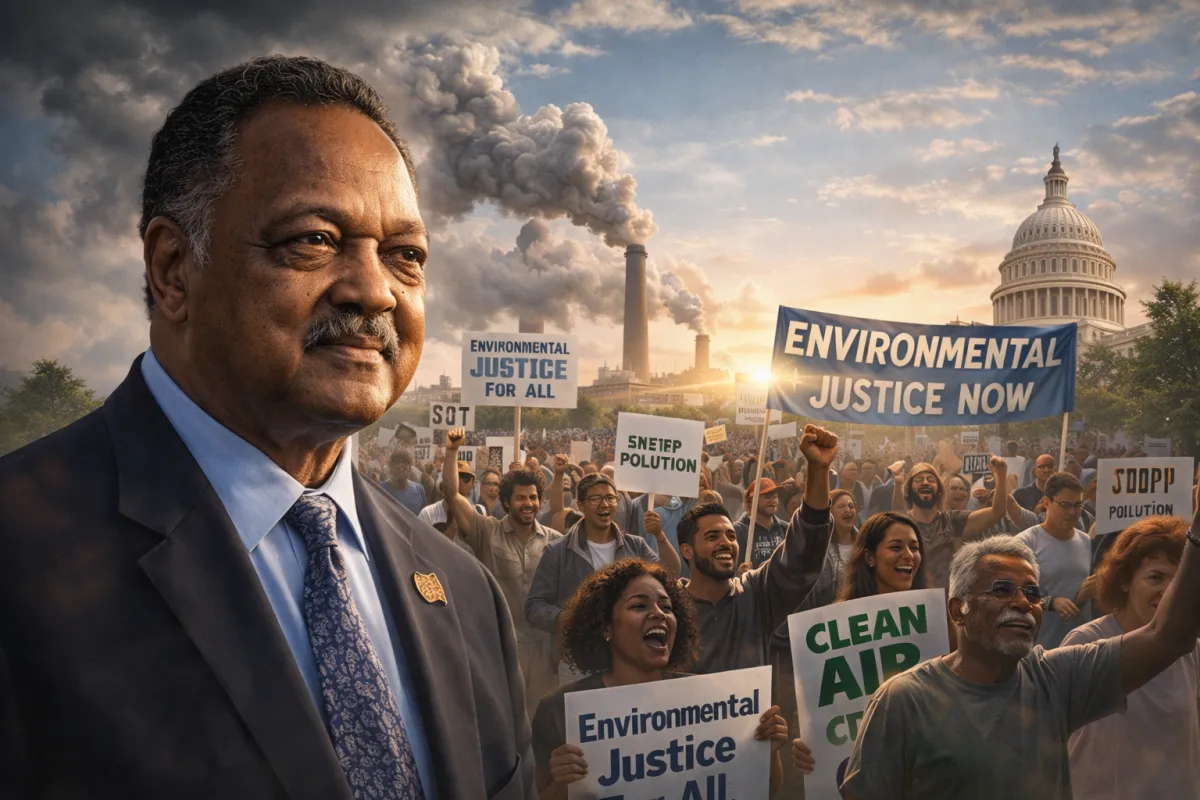
Jesse Jackson’s Vision for America and the Movement for Environmental Justice
Jesse Jackson’s Vision for America and the Movement for Environmental Justice
Jesse Jackson, a towering figure in American civil rights history, not only fought for racial equality and economic justice but also helped bring environmental justice into the national spotlight. Long before the movement gained widespread recognition, Jackson connected the dots between clean air, safe drinking water, and civil rights — helping shape a more inclusive vision of what justice means in America.
Environmental justice is a powerful social and civil rights movement that advocates for the fair treatment and meaningful involvement of all people — regardless of race, income, or background — in environmental policy and decision-making. This movement arose from the recognition that marginalized and low-income communities are disproportionately exposed to pollution, hazardous waste, and environmental hazards, often without equal access to protection or participation in decisions that affect their health and futures.
During his 1988 presidential campaign, Jesse Jackson made environmental justice a key part of his platform, linking ecological issues to broader struggles for equality and human rights that had been central to his lifetime of activism. By pushing for policies aimed at reducing pollution, conserving natural resources, and expanding access to clean environments, Jackson helped broaden the scope of civil rights advocacy to include environmental concerns.
The Roots and Goals of Environmental Justice
The modern environmental justice movement gained traction in the 1980s, rooted in communities that had long suffered the burdens of industrial pollution, toxic waste sites, and unsafe living conditions. The historic struggles in these neighborhoods underscored how environmental racism — discriminatory practices that place environmental harms disproportionately on communities of color — was deeply connected to systemic inequalities in housing, healthcare, and political power.
At its core, environmental justice seeks to ensure that every person has the right to a clean and safe environment, equal protection under environmental laws, and a meaningful voice in decisions that impact their surroundings. This includes advocating for fair enforcement of environmental regulations, equitable development practices, and public involvement in environmental policy.
Jackson’s Legacy and Lasting Influence
Jesse Jackson’s advocacy for environmental justice broadened how Americans understand environmental issues. Rather than viewing clean air and water solely as ecological concerns, Jackson framed them as matters of equity, access, and human dignity — essential elements of a just society. His emphasis on environmental protection as intertwined with economic opportunity, racial justice, and community health helped inspire a new generation of activists and organizations committed to environmental equity.
By championing environmental justice decades ago, Jackson helped ensure that marginalized communities would have a platform in national discourse on environmental policy. Today’s environmental justice movement continues to expand on his vision by pushing for policies that reduce pollution, strengthen community resilience, and elevate voices historically excluded from environmental decision-making.
Why Environmental Justice Matters Today
As climate change accelerates and environmental challenges grow more complex, the importance of environmental justice is clearer than ever. Communities that once bore the brunt of pollution now face increased risks from climate impacts, unsafe infrastructure, and economic disparities. Environmental justice advocates work tirelessly to ensure that future solutions are equitable, inclusive, and rooted in community empowerment — an extension of the civil rights legacy that Jesse Jackson championed throughout his life.
Jackson’s vision for America embraced the idea that justice must be comprehensive, addressing not only racial and economic inequality but also the fundamental right to live in a healthy and nurturing environment. That legacy remains a guiding force in environmental advocacy and civil rights work today.